Alternative Proteins in Practice: What Comes After Cultivation?
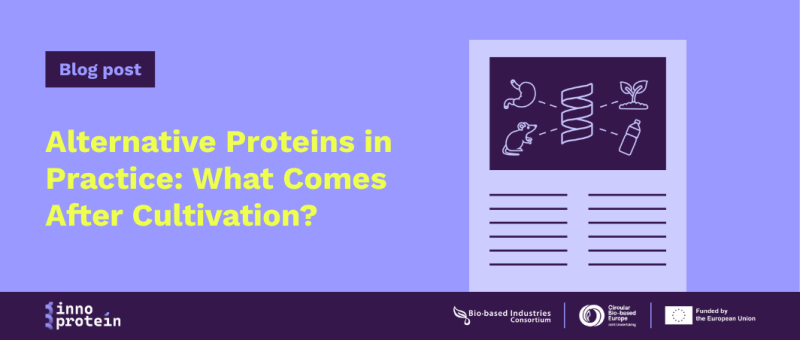
Researchers with the InnoProtein consortium have been hard at work, developing high-quality protein ingredients from underutilized sources. But demonstrating how these alternative proteins fit into our world, from food to feed, to bio-sourced materials, is a new and exciting challenge. These upcoming research articles aim to build off previous work, to explain not only how alternative proteins are produced, but how they can contribute to more circular, low-waste food systems.
Thus far, the project has focused on cultivating and extracting proteins from microorganisms like fungi, bacteria, insects, and algae. But identifying a promising protein source is only part of the work. Important questions remain: how well can the body absorb these proteins? Can animals thrive on diets built around them? And how can by-products and side streams from production be transformed into valuable materials such as bio stimulants and biodegradable plastics?
The upcoming research articles in this series each address one of those questions directly, covering topics like:
- In vitro digestibility
- Simulating digestion in the lab to understand how well these proteins are broken down and absorbed.
- In vivo studies
- Animal feeding trials designed to assess real-world nutritional performance.
- Bio stimulants
- Protein-derived products that support plant growth and reduce reliance on synthetic inputs.
- Plastic-free materials
- Using proteins and chitin to develop biodegradable alternatives to single-use plastics.
More sustainable proteins alone are not enough to transform the future of food. The broader goal is to create food systems where every output has value, from nutritious food and feed ingredients to agricultural and bio-based applications that reduce waste and improve resource efficiency. Stay tuned for updates on the project’s research and insights into how InnoProtein is helping drive more circular protein production systems.