CBE JU Cluster Projects’ Workshop on Food & Feed
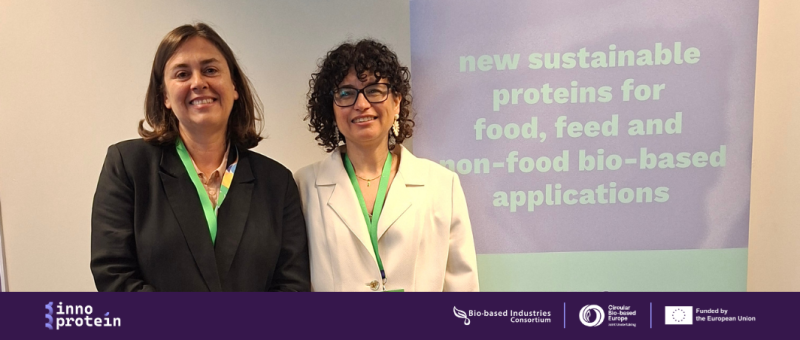
Last 9th of June 2026, InnoProtein was invited to join the CBE JU cluster project’s workshop on food & feed. The event brought together researchers, companies (including SMEs), and policymakers to showcase innovative bio-based solutions for sustainable food and feed systems. The event highlighted advances in alternative proteins, biomass valorisation, circular bioeconomy models, and the commercialization challenges facing the sector.
Luisa Mascia, project officer of InnoProtein, presented the CBE JU portfolio specifically for food and feed ingredients. She stressed the importance of bio-based ingredients in reducing pressure on agricultural land, improving resource efficiency, and supporting the transition to sustainable food systems. The session also highlighted collaboration across European institutions and industry stakeholders to accelerate innovation.
Session 1: Food & Feed Ingredients
Several projects demonstrated how agricultural by-products and underutilized biomass can be converted into high-value products.
- SUSTAINEXT presented a zero-waste biorefinery model based on olive leaves and other feedstocks, producing ingredients for the feed, cosmetic, pharmaceutical, and food sectors through a multi-product cascade approach.
- UP4HEALTH showcased the transformation of olive pomace into functional food ingredients, including a patented microencapsulated prebiotic olive powder that has already reached commercial sales.
- PURPLE4LIFE introduced the use of purple bacteria as a sustainable source of protein, omega-7 fatty acids, and carotenoids, with strong potential for aquaculture feed applications.
- RUNFASTER4EU highlighted the development of bio-based value chains using underutilized agricultural land, producing a broad range of products, including bioplastics, bio-stimulants, feed ingredients, and cosmetic formulations.
And
- INNOPROTEIN, which presented its work on innovative protein production pathways.
During the discussion, participants identified regulatory approval as one of the main barriers to commercialization. The importance of well-prepared EFSA dossiers and early engagement with regulators was emphasized. Farmer involvement was also highlighted as a key factor for building resilient and scalable value chains.
The workshop follows with projects focused on aquaculture and blue foods:
Session 2: Aquatic Feedstocks and Blue Foods
The keynote presentation focused on the growing role of aquatic biomass in the bioeconomy. Emerging technologies such as engineered microorganisms, advanced processing techniques, and marine biorefineries are creating new opportunities for food, feed, and health-related products.
Key projects included:
- PROTEUS, developing the world’s first integrated industrial-scale biorefinery based on brown macroalgae.
- MULTIPLY, scaling up the production of microalgae-derived products.
- MARMADE, valorising marine biomass such as shrimp waste, blue crab waste, and seaweed using advanced extraction technologies.
- ALLIANCE, redesigning microalgae value chains to create strategic ingredient platforms.
- CLEANALGAE2VALUE, producing proteins from captured CO₂ through innovative microalgae processes for food and bioplastics applications.
The session highlighted both the opportunities and challenges of the blue economy. While private investment is increasing, regulatory requirements, consumer acceptance, and high capital costs remain significant obstacles. Participants stressed the need for dedicated activities addressing consumer perception and market adoption.
Session 3: Alternative Proteins
The afternoon session focused on alternative protein technologies and industrial scale-up.
The keynote from ENOUGH introduced Abunda, a mycoprotein platform for meat, seafood, and dairy alternatives. The presentation emphasized the difficulties of moving from laboratory development to large-scale industrial production.
Featured projects included:
- PLENITUDE, targeting large-scale protein production with minimal waste.
- ZEST, developing AI-controlled fermentation systems for protein production.
- RURAL BIOREFARMERIES, producing food and feed proteins from grassland biomass.
- MYCOSTRUCT, creating structured mycelium-based proteins with a meat-like texture and high nutritional value.
- ALEHOOP, developing proteins from algae and legume processing by-products.
- SYNOPROTEIN and UNICO2RN convert carbon sources and biogenic CO₂ into microbial proteins and other valuable products.
- PROSCALE, scaling continuous fermentation processes using food industry side streams.
- PROMISEANG, producing proteins from underutilized marine biomass and industrial biowaste through fermentation.
A recurring theme was the need to attract private investment by demonstrating clear business models, scalability, and market readiness. Speakers also emphasized the importance of integrating circular feedstocks, reducing production costs, and improving sustainability performance.
Key Takeaways
The workshop demonstrated the rapid progress being made in Europe’s bio-based food and feed sector. Across all sessions, common priorities emerged: maximizing resource efficiency, developing alternative protein sources, valorising agricultural and marine side streams, and reducing waste through circular production models.
Despite strong technological advances, regulatory approval, consumer acceptance, scale-up challenges, and access to investment remain critical factors for successful market deployment. Continued collaboration between industry, researchers, farmers, regulators, and investors will be essential to bring these innovations from demonstration scale to widespread commercial adoption.
InnoProtein will continue its contribution to this mission by finalizing the research on new extraction methods of proteins from microalgae, fungi, insects, and bacteria, combining with a zero-waste approach to fully valorize the biomass.